
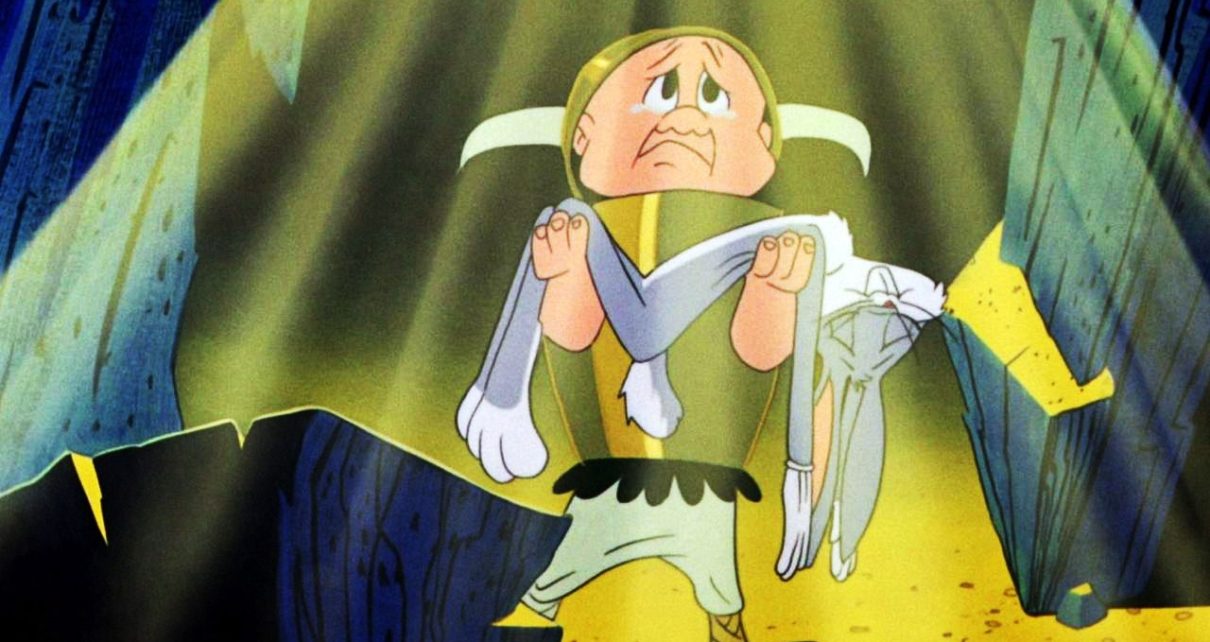
It begins with the swell of an orchestra, the crack of lightning, and dramatic chiaroscuro struck across the stone of a cliffside. Chuck Jones, the wildly respected director of “What’s Opera, Doc?” and the majordomo of American animation, didn’t earn his reputation for skimping on his work, and a full six decades later, the 1957 cartoon classic still sports his trademark directorial flair. Thanks to its critical acclaim and liberal airplay on channels like Boomerang and Cartoon Network in recent years, it’s still one of the most memorable cartoons from Jones’s heyday as the most celebrated director of Looney Tunes shorts. A laughably loose adaptation of Richard Wagner’s Die Walküre, Jones took the operatic pomp of Norse mythology and superimposed it onto the cartoonish conceit of Elmer Fudd attempting to kill Bugs Bunny.
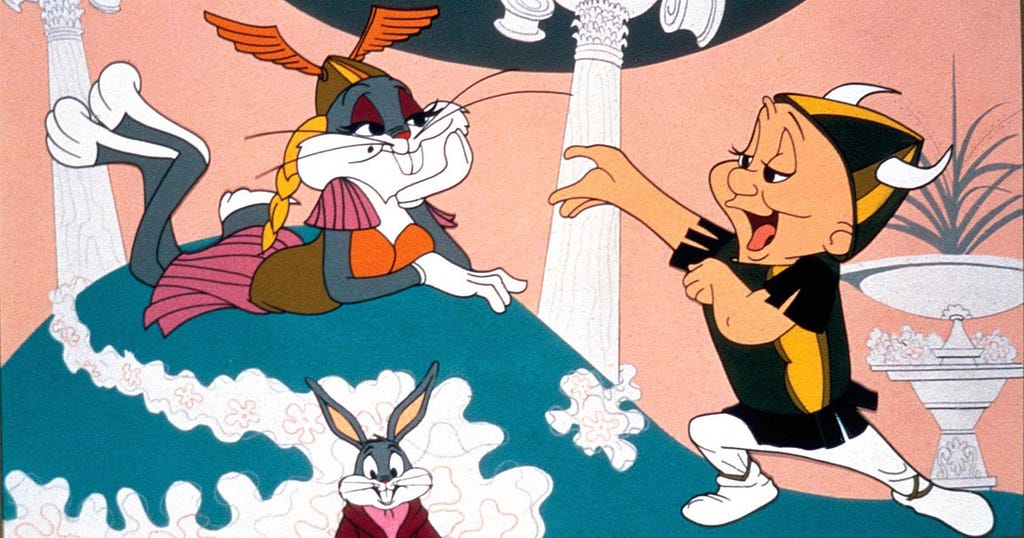
As befits its legacy, pulling this cartoon off took serious labor and dedication. Jones was known for diligence to his craft, to the point that he had his animators observe professional ballet dancers to nail their style just right. His production staff reportedly spent six times the amount of labor on “What’s Opera, Doc?” that they would on a typical cartoon, with Jones having them cook the books by listing the title of a Wile E. Coyote and Road Runner cartoon on their time cards to make up the difference. In the end, all that manic perfectionism and artistry paid off.
There was one detail, however, that slipped past him. Something Jones never quite nailed. It’s miniscule. If you re-watched “What’s Opera, Doc?” dozens of times over the years, you’d probably still never spot it. But Jones did, and he told his last protégé about it when they screened the famed short together.
“It’s one of the things that bothered Chuck to the very end.”
“It’s still hard for me to believe that I had the opportunity that I had,” Stephen Fossati told The Dot and Line when we sat down to talk about the man he considered his hero. Jones first hired Fossati to work with him at Warner Bros. in the early ’90s. Fossati was in his 20s, and Jones—by then considered one the most important American animation directors to ever live—was tasked with creating animation for the Robin Williams film Mrs. Doubtfire. Fossati went on to work for Jones on a variety of projects for the remainder of his life until Jones’s death in 2002—everything from working on new Looney Tunes shorts to producing an old Jones concept for the Flash animation era. Assisting Jones on the WB lot in his twilight years came with unique perks:
“There were times when Chuck would want to see an old cartoon,” Fossati explained. “We would have screenings for our animators and we had the 35 millimeter prints. I had the great pleasure of watching many, if not all, of his greatest cartoons with Chuck on the big screen in a private screening room.”
So what did Jones think about his short that 1,000 animators once voted was the best American cartoon ever made?
“It’s like at least probably a dozen, two dozen times that I had the privilege of watching that cartoon with Chuck,” Fossati said. “Every time, we’d get to the point where Elmer Fudd is jabbing the spear into the rabbit hole, and Bugs Bunny pops up and freezes, and Elmer Fudd freezes looking at Bugs Bunny, and the plates of his skirt fumble around. It’s one of the things that bothered Chuck to the very end.”
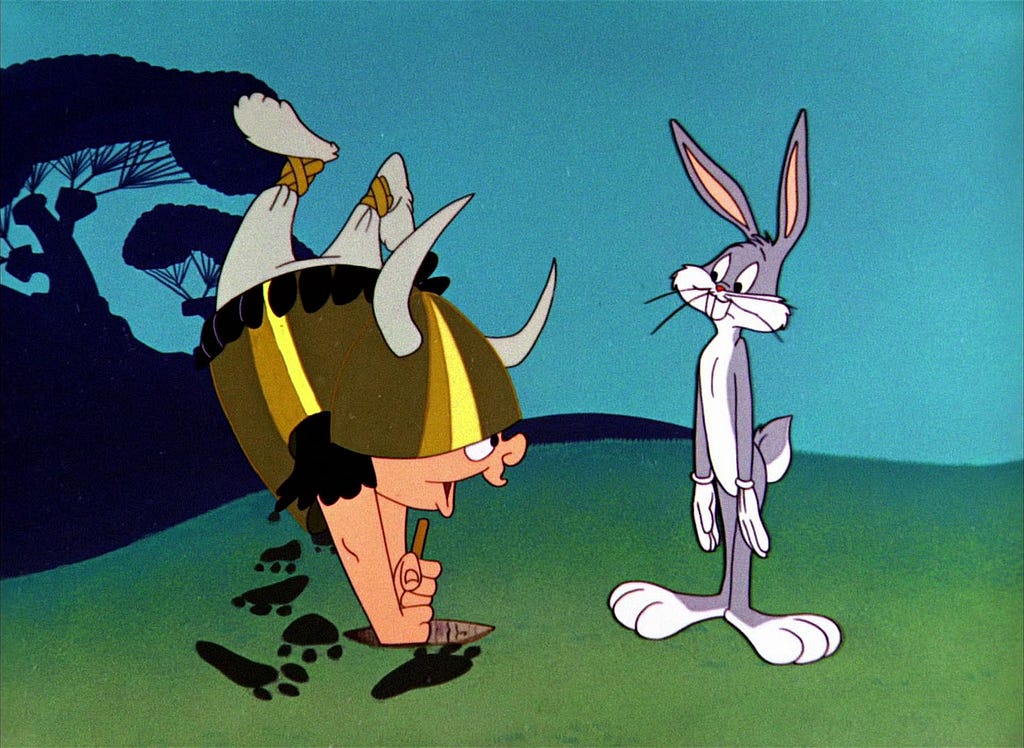
Fossati went on: “[Chuck] had always intended that those plates fell, inverted, fell on Elmer Fudd’s skirt. That they would go ‘Dink, dink, dink, dink, dink, dink, dink, dink, dink,’ but Treg Brown [the sound editor responsible for the short] forgot to put the sound effects in. He would watch it, and every time he would watch it, he’d give a, ‘Hurgh.’ Sort of like, ‘Goddammit. I can’t believe that happened.’ It was quite remarkable.”
Fossati laughed telling the story. “You can watch it. Watch the cartoon,” he said. “When, it’s ‘Kill the wabbit! Kill the wabbit! Kill the wabbit?’ He’s frozen there, and you just see the ‘Dink, dink, dink, dink.’ Now you’ll hear it.”
The perfectionism extended well beyond “What’s Opera, Doc?”
Fossati was careful to contextualize Jones’s frustration. Obviously, his boss was happy enough with his life’s work to rewatch several old cartoons that he’d worked on years prior, over and over and over, but nonetheless: “Chuck always said that great artists never finish what they do. They just abandon it,” Fossati said, noting that Jones probably stole that adage “from Mark Twain, probably, or someone else.” He described working with Jones on other projects where the man, even in his 80s, would do several drafts of sketches before nailing the one he wanted. The differences were minor, but each one mattered to him. That only became apparent to Fossati after working with him for some time.
“I realized that here was a guy who not only was arguably one of the greatest drafts people ever in the history of animation, had single-handedly helped to define a style of animation that didn’t exist before him, had created these characters, had made some of the greatest cartoons ever, and yet he was still working to get precisely the exact attitude, pose, and silhouette that he was looking for,” Fossati said. “I went, Wait a minute. He was just a guy. It was work for him. He loved it. He was great at it, but it wasn’t automatic. It wasn’t as if he put the pencil on the page and it just came out perfect. It didn’t. That made me feel like, Well wait a minute. If it’s work for Chuck Jones, it’s okay that it’s work for Steve.”
A gift to Mr. Jones
Fossati points out that his friends and collaborators knew the missing sound effect was a bit of a sticking point. The audio accompanying the old film prints stands as is, but that didn’t mean anything for subsequent iterations or interpretations of “What’s Opera, Doc?” One rendition of the cartoon retains the omitted sounds that Jones intended to include.
George Daugherty, the conductor behind Bugs Bunny on Broadway live show in which the shorts play on the big screen in front of a live orchestra, includes the effect when his musicians play the short. “He very happily gave Chuck the gift in all of the performances,” Fossati said.
“He did actually put in the ‘Dink, dink, dink, dink, dink, dink, dink,’ just so that Chuck could always have that.”
If you liked this story, sign up for our newsletter.
Thanks for reading The Dot and Line, where we talk about animation of all kinds. Feel free to follow us on Twitter and Facebook.
Another exclusive interview…
Exclusive Interview: Andrea Romano on Retiring and 30 Years’ Hard Work